Plant holobionts
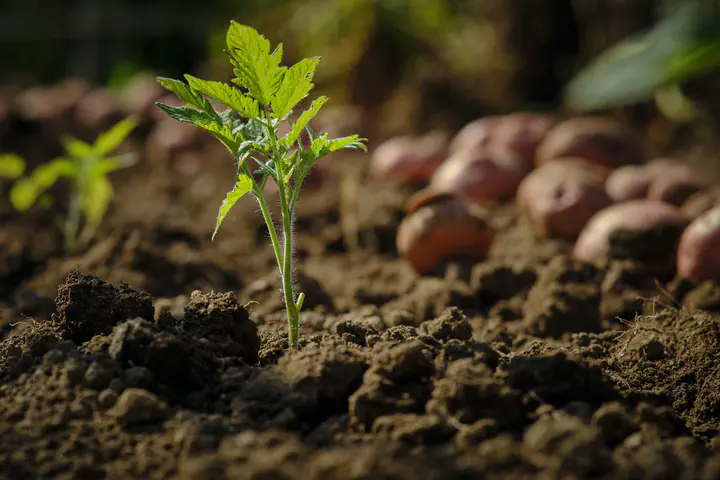
We study plants as holobionts—integrated systems made up of the plant and its associated microbial partners—to understand how this collective unit responds to environmental challenges and shapes plant health, development, and evolution.
No plant lives alone. Every plant is colonized, inside and out, by a vast community of bacteria, fungi, and other microorganisms, and it is increasingly clear that these partners are not passive passengers. Together, the plant and its associated microbes form a holobiont: an integrated biological unit whose collective genome and physiology extend far beyond the plant itself. We take this unit, rather than the plant in isolation, as our fundamental object of study.
Working at the holobiont level changes the questions we can ask. Instead of treating microbes as a background variable, we investigate how the plant and its microbial partners jointly sense and respond to environmental challenges—drought, heat, poor soils, pathogens, and herbivores—and how that combined response feeds back into plant growth, stress tolerance, and fitness. This perspective links processes that are usually studied separately, from molecular signaling to community ecology.
Across our projects, the holobiont concept is the thread that ties everything together. It shapes how we design experiments, how we interpret variation among individual plants, and how we think about the long-term evolutionary consequences of hosting a microbial community. Understanding plants as holobionts is, ultimately, a way of understanding how life is organized as partnerships rather than isolated organisms.
Some of our work:

Antonino Malacrinò
Assistant Professor
I’m a molecular ecologist interested in host-microorganism interaction.