Fire and soil microbiomes
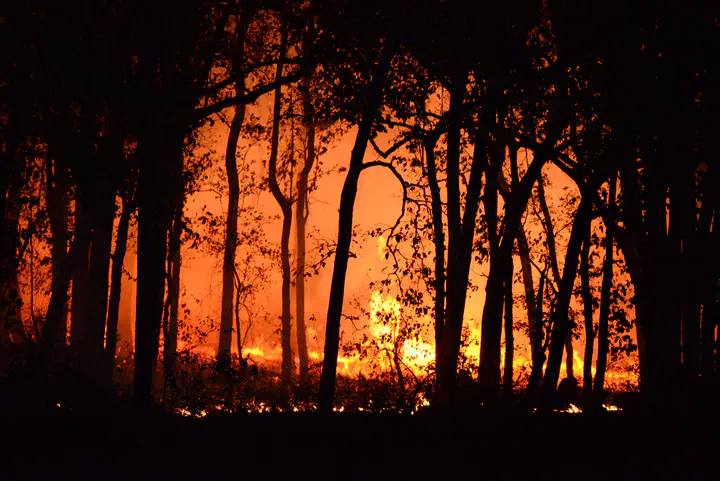
We investigate how fire reshapes the structure and function of soil microbial communities, and what these shifts mean for the plants that recolonize burned ground.
Fire is a powerful force reshaping ecosystems around the world, and its frequency and intensity are rising. When fire moves through a landscape it does more than remove aboveground vegetation—it transforms the soil beneath, killing some microbes outright, favoring others adapted to heat and post-fire conditions, and altering the chemical environment they inhabit. We study how fire restructures soil microbial communities and what those changes mean for the plants that must recolonize burned ground.
The soil microbiome is central to plant recovery after fire. The microbes that survive or rapidly recolonize determine whether returning plants encounter partners that support nutrient acquisition, growth, and defense—or a disrupted community that leaves them vulnerable to stress and disease. We track how these communities are reassembled in the aftermath of fire, how quickly they recover their pre-fire structure and function, and how the trajectory of microbial recovery is linked to the health and establishment of the next generation of plants.
This work connects the lab’s core interests in microbiome assembly and plant health to one of the most consequential disturbances of our time. By understanding the microbial dimension of post-fire recovery, we aim to inform how ecosystems regenerate after wildfire and how soil microbiomes might be leveraged to support restoration in increasingly fire-prone landscapes.
Read some of our work:

Antonino Malacrinò
Assistant Professor
I’m a molecular ecologist interested in host-microorganism interaction.